Factors Affecting Resistance
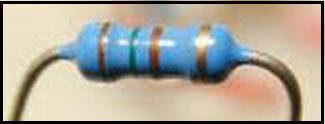
Fixed Resistance type
Factors Affecting Resistance
Five factors determine the resistance of conductors. These factors are length of the conductor, diameter, temperature, physical condition and conductor material. The filament of a lamp, the windings of a motor or coil, and the bimetal elements in sensors are conductors. So, these factors apply to circuit wiring as well as working devices or loads.1- LENGTH Electrons in motion are constantly colliding as voltage pushes them through a conductor. If two conductors are the same material and diameter, the longer conductor will have more resistance than the shorter conductor. Conductor resistance is often listed in ohms per foot (e.g., spark plug cables at 5 Ohms per foot). Length must be considered when replacing conductors.
2- DIAMETER Large conductors allow more current flow with less voltage. If two conductors are the same material and length, the thinner conductor will have more resistance than the thicker conductor. Conductor resistance tables list ohms per foot for conductors of various thicknesses (e.g., size or gauge ... 1, 2, 3 are thicker with less resistance and more current capacity; 18, 20, 22 are thinner with more resistance and less current capacity). Replacement conductors and splices must be the proper size for the circuit current.
3- TEMPERATURE In most conductors, resistance increases as the conductor temperature increases. Electrons move faster, but not necessarily in the right direction. Most insulators have less resistance at higher temperatures. Semiconductor devices called thermistor have negative temperature coefficients (NTC) resistance decreases as temperature increases.
4- PHYSICAL CONDITION
Partially cut or nicked conductor will act like smaller conductor with high resistance in the damaged area. A kink in the conductor, poor splices, and loose or corroded connections also increase resistance. Take care not to damage conductors during testing or stripping insulation.
5- MATERIAL Materials with many free electrons are good conductors with low resistance to current flow. Materials with many bound electrons are poor conductors (insulators) with high resistance to current flow. Copper, aluminum, gold, and silver have low resistance; rubber, glass, paper, ceramics, plastics, and air have high resistance.
AutoHex (Auto Diagnostic scanner) is one of the best Professional scan tools to for Cars; Autohex Scanner can test the Systems of the Car effectively and easily, with many powerful features to help you in diagnosing and testing.
Programming BMW F Series
Description
Defining the five factors affecting the resistance of conductors, which are length of the conductor, diameter, temperature, physical condition and conductor material and these factors apply to circuit wiring as well as working devices or loads.
Autohex II Reviews

AutoHex II
AutoHex Forum